Adjunct Professor, Department of Economics, Columbia University
kh2830@columbia.edu
Selected Publications
Work in Progress
Introduction
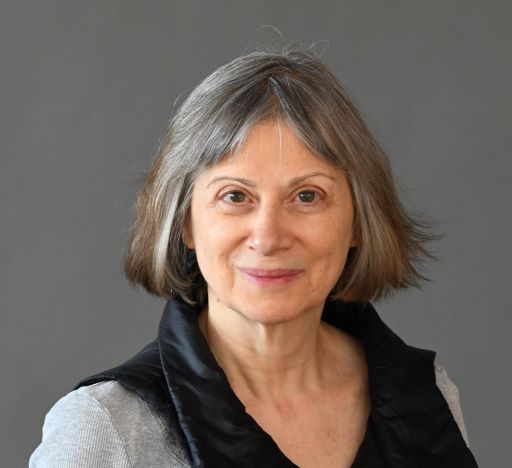
My work in the last 20 years broadens behavioral economics to include the effect of culture on cognition and preferences. In a series of experiments, I showed that caste identities influence empathy, performance, trust, and coordination and cooperation both between and within castes. I co-directed the World Bank’s World Development Report 2015: Mind, Society, and Behavior, the first synthesis of applications of behavioral economics to the process of development. My forthcoming book, The Other Invisible Hand: How Culture Shapes Us and the Societies We Create, breaks down barriers between disciplines to provide a more robust sense of how humans make decisions. The “other invisible hand” refers to the concepts, categories, and narratives through which the members of a society process information and create the common meanings that guide their behavior. The book shows that culture helps explain divergence in income between countries and between regions within countries. My work has been published in the American Economic Review, the Economic Journal, PNAS, the Journal of Development Economics, the Journal of International Economics, and many other journals. I co-edited two books—The Economics of Rural Organization and Poverty Traps. I earned a PhD in economics from Princeton University and was a National Merit Scholar. Since I retired from the World Bank, my main job has been to teach behavioral development economics at Columbia University.